
Uncategorized

The Multiple Layers of Healing

Grief is in two parts. The first is loss. The second is the remaking of life.

How can we possibly go on in the world when we lose someone we love? There is no single way to deal with grief. The road it takes you down is gruelling and demanding. Although the following layers of healing I will discuss may not entirely eliminate your grief, I believe that they can provide moments of relief during difficult days. Please bear in mind, the following ideas may take months, or perhaps years, to resonate with you after your loss.

The First Layer

Being alone is especially difficult when you are grieving. For me, I craved company and continuous noise to escape my thoughts. As someone who tries to independently deal with difficult emotions, it was not something I particularly liked. We need to understand that grief is one of the hardest emotions to go through, and leaning on others for support is not a sign of weakness. This first layer of healing emphasises that we do not have to take this journey alone. One of our greatest strengths as a species is that we take care of each other. It is okay to ask for help during these times. When I lost my grandmother, I found solace in regularly talking to my family. Sharing stories and fondly reminiscing about our time with her not only provided comfort, but it was a way that we kept her memory alive. 

The Second Layer

I truly believe that when loved ones leave us in this lifetime, they are still here in some form. The second layer involves understanding that although they have left us, in a sense they are still here. The atoms that made up their being still exist in the nature all around us. I came to this realisation one Winter’s afternoon a few months ago.

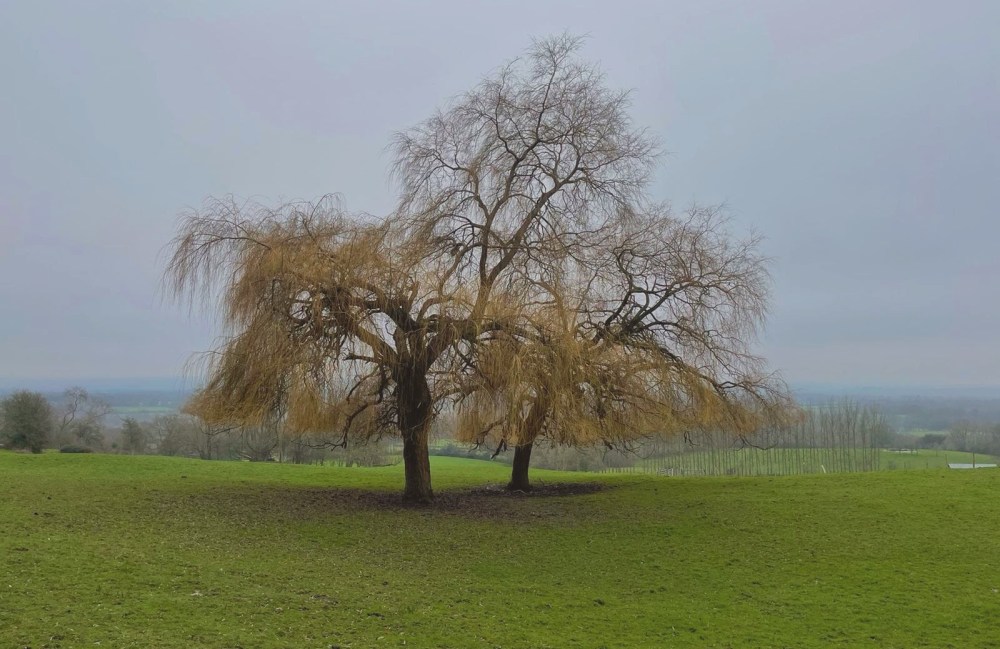
For several months after losing my grandmother, I buried my emotions deep within me. As with all unattended emotions, they continued to resurface. I got to the point where the time came to face them. One afternoon, I sat in a park with photos and memories of my grandmother, giving myself permission to freely express my emotions. Although cathartic, there were still things that I had left unsaid which continued to gnaw at me. So, I decided to write my grandmother a letter. I released words of sorrow, of regret, of gratitude. As I wrote, something remarkable happened. Sitting at the foot of a tree, with the sun beating down on me and the wind through my hair, I started to feel her all around me. She was there in the warmth of the sun. She was present in the coolness of the breeze. Her pulse was beating in the trees around me. With each passing moment sitting in that park, my grandmother was telling me that she was still there with me.

That afternoon provided me a moment of serenity that I had not felt in a long time. Most importantly, it allowed me to reconnect with my grandmother. My grief did not disappear completely, but I felt I was reminded of something I knew innately—I could still ‘be’ with her whenever I needed to, by simply stepping outside and connecting to the life around me. Even though it was not in the same physical form I was used to, I could still feel her ongoing presence.  

­The Third Layer

We cannot take anything with us when we die, we can only leave parts of ourselves behind—our impact, our values, our memories. When you think about the person you have lost, where can you see that they still live on? Identifying this gives us the third layer of healing. For me, I see my grandmother in my family. Her values of generosity and unconditional kindness, her humour, and her wit all live on within us. Our lost loved ones are kept alive by those they have touched and inspired. They are kept alive in us. And in that, we can continue their legacy.

The Fourth Layer

Among the painful emotions that come with grief, we often forget the most powerful one that is lying underneath them all—love. After all, it is because of our undying love that we are grieving. There is no sadness without happiness. It is the duality of life. Although grief may feel like love with nowhere to go, in reality, we can redirect that love in so many other ways. We can use it to fuel our purpose, to fuel kindness and compassion for others. That is what our dearly departed would have wanted for us. This is the fourth layer of healing—ensuring this love does not die.

Closing

There is no straight road to healing; it is messy and winding, with roadblocks and detours all along the way. Take gentle care of yourself in these times and lean on others for support. Connect with those you have lost through nature or in your own way. Recognise them in the lives that they have touched, and pass on the love you have for them to another. For then, they will continue to live on forever.

Dedicated to Dadi, her daughters, and her grandchildren.

Read Part 1: The Multiple Layers of Grief

Do Not Stand at My Grave and Weep
Poem by Mary Elizabeth Frye

‘Do not stand at my grave and weep
I am not there; I do not sleep.
I am a thousand winds that blow,
I am the diamond glints on snow,
I am the sun on ripened grain,
I am the gentle autumn rain.
When you awaken in the morning’s hush,
I am the swift, uplifting rush
Of quiet birds in circled flight.
I am the soft stars that shine at night.
Do not stand at my grave and cry,
I am not there; I did not die.’
Uncategorized

The Multiple Layers of Grief

Grief is just love with no place to go.

The death of a loved one can be an unbearable kind of pain. Life can crash to a momentary stop and can cause us to re-evaluate the way we think about everything. Losing several loved ones this past year, including my grandmother, has shown me that grief can hit us in more ways than one.

These experiences have taught me that there are multiple layers of grief. I am not referring to the five stages of denial, anger, bargaining, de­pression, and acceptance that are often discussed, but rather the various components that encompass the state of grief.

The First Layer

As someone who frequently contemplates death, I thought I had some level of preparation for when my loved ones would die. But truth be told, no amount of preparing for this time can compare to the harsh and painful reality of when it occurs. Your mind scrambles to make sense of what has happened. It reflects upon memories and last moments, and a powerful yearning to be with this person one last time consumes you.

In the months that followed losing my grandmother, I lived in a state of pure adrenaline. My mind did not stop racing, and I struggled to concentrate on any of my usual activities. At times, I obsessively looked through old photographs and videos, remembering the way she moved and listening to her voice. At other times, I felt melancholy at the sight of them. I only wished for one thing: to see her once more.

The Second Layer

Additionally, to one’s own feelings, there is a layer of pain on behalf of those who are also experiencing the same loss. There is an unspoken level of anguish here, as you feel helpless in what to do or say, but understand all too well that nothing will truly help.

Having a large family connected to my grandmother meant that I had many people to lean on for support, and reciprocally, needed support. We did our best to console each other and offer words of comfort and space for tears. However, in those early days, we knew that nothing could be said to relieve the pain in those moments.

The Third Layer

There is a layer that is seldom discussed when dealing with grief–that which brings a harsh reminder of our impermanence. It is at these times that we become truly aware of life’s transience and our limited time on Earth. We question how our loved ones were here one moment and gone the next. We feel a strong sense of nostalgia and a yearning for simpler times. We cling tightly to those that are still here as we fear for when their time arrives.  

Grief, almost cruelly, reminds us that everyone will eventually die. It creates an additional burden on our minds while pushing us into moments of introspection and contemplation. Although we may consider this idea from time to time, grief brings it to the forefront of our minds.  

I think this is what makes grief such a complex and persisting emotion. It involves many layers that we have no choice but to work through, all whilst attempting to go on with our daily lives. It makes moving on difficult and time-consuming, and rightly so. We are not only trying to navigate our own emotions and help our loved ones, but we are also forced to face the universal truth of knowing nothing is permanent, not even those we love.

In remembrance of Dadi, John, and Joyce.

Read Part 2: The Multiple Layers of Healing

When Tomorrow Starts Without Me
Poem by David Romano  

When tomorrow starts without me
And I’m not here to see
If the sun should rise and find your eyes
All filled with tears for me

I wish you wouldn’t cry
The way you did today
While thinking of the many things
We did not get to say

I know how much you love me
As much as I love you
Each time that you think of me
I know you will miss me too

When tomorrow starts without me
Please try to understand
That an angel came and called my name
And took me by the hand

The angel said my place was ready
In Heaven far above
And that I would have to leave behind
All those I dearly love

But when I walked through Heaven’s gates
I felt so much at home
When God looked down and smiled at me
From his golden throne

He said this is eternity
And all I promised you
Today for life on earth is done
But here it starts a new

I promise no tomorrow
For today will always last
And since each day’s the exact same way
There is no longing for the past

So when tomorrow starts without me
Do not think we’re apart
For every time you think of me
Remember I’m right here in your heart.

UpFromTheWell

Lessons From The Elderly

‘Old age isn’t so bad when you consider the alternative.’

Maurice Chevalier

Quiet. Frail. Wise. Soft. Sweet. Old.

When I worked as a medical receptionist, I always felt strangely drawn to the elderly patients that came in. They walked slowly, spoke softly, and acted kindly. It became a sign that I needed to work more closely with them; so I became an aged care worker.

I will shamefully admit, before working with this group, I held stereotypes toward them. They seemed quite serious, and a little boring. However, getting to know them on a deeper and more individual level not only proved me wrong, but allowed me to realise their great value.

Their long lives hold seeds of wisdom that are waiting to be reaped – especially with the majority of us being many years their junior.

I worked with clients over 90 – an age group directly affected by the World Wars, and had experienced great struggles and hardships. Yet, despite it all, they were unbelievably kind and unconditionally loving, and faced life and all its hardships with grace, acceptance, and gratitude. Immense gratitude.

I often asked my clients what their secret to ageing well was, and what were the most significant things they had learnt from life. Their answers were highly insightful and often deeply moving, however, I learnt the most valuable lessons from the elderly by observing how they lived, how they spoke, and how they approached life.

Here are 8 principles that I have found the elderly live by, and some insights they had shared with me:

Slowing down: It is natural that elderly people slow down due to their mobility problems. However, I discovered that they also approach life slowly simply because it is the manner in which they live – without urgency. They enjoy the moment they are in, with who they are with, and don’t take their time for granted.
As a client once said to me: ‘Don’t rehearse your future’.

Appreciation: Their lack of mobility does not stop them from enjoying the wonders of the world. They often shared stories experienced from their window, whether it be delighting in the slow bloom of a flower or seeing a regular morning jogger.
As a client once said to me: ‘It’s the small things you remember, not the big things’.

Gratitude: Despite experiencing hardships in their old age, I found that elderly people seldom focus on the negative aspects of their lives. Rather, they only spoke of the positives they still had, whether that be a visit from a grandchild or the warmth gained from a hot cup of tea.
As a client once said to me: ‘There’s good and bad in the world, but focus on the good’.

Connection: All my clients expressed the importance of human connection, speaking mostly of their loved ones in conversation with deep fondness and love. When reflecting upon the best moments of their long lives, it always came back to time spent with people.
As a client once said to me: ‘Treat everyone like family’.  

Humour: They often shared that humour was the solution to any problem, frequently recounting personal stories with whole-hearted laughter.
As a client once said to me after the passing of her late husband: ‘You can always find humour, even in the darkest of times’.

Acceptance: They view their life with satisfaction, acknowledging that their past was behind them, and to face the future with courage.
As a client frequently said when battling numerous health problems: ‘It’ll be alright’.

Kindness: Whether through a soft smile or a gentle word, they express their love to every person they encounter, whether it be a neighbour, a worker, or a stranger.
As a client once said to me, ‘Be tolerable and kind to everyone’.

Grace: They face their ageing with strength and grace, rarely self-pitying and always standing proud.
As a 94-year-old client once said to me, ‘Don’t make yourself older than you are’

We should not wait until old age to embody these principles. This wisdom is ours for the taking now. Just as we take legal advice from a lawyer, or turn to doctors for their health expertise, we should learn the secrets to longevity and a fuller life from those with the most experience in that area: the elderly.

I have learnt a lot working with this beautiful age group, the least of which is to remember that life was never promised to be easy, but it does end up being worth it.

Dedicated to J.B. & J.D. Rest In Peace.