
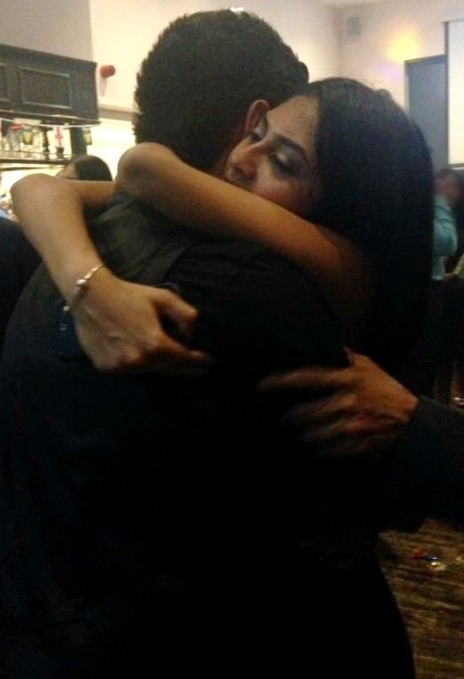
Sometimes, reaching out and taking someone’s hand is the beginning of a journey. At other times, it is allowing another to take yours.
Vera Nazarian
Depression is lonely. Not only does it disconnect us from ourselves, it disconnects us from others.
Unfortunately, when we are stuck in the well of depression, we rarely reach out. Whether it be protecting others from concern, feeling guilty about how we are feeling, or fearing vulnerability; we have a reason. These reasons feel valid, but it often adds to our despair, and makes us feel even more isolated.
Sharing your pain is not a sign of weakness. Going through hard times and experiencing depression is a part of the human experience.
However, there is an additional fundamental aspect of the human experience: connection.
Depression holds many of us captive, but its invisible chains make it hard for others to detect. Often, we pretend to others that we are completely fine, trying desperately to mask the feelings of pain within. We attempt to shield others from our pain, however, we are only hurting ourselves more by doing this.
The weight you are holding is heavy. Sharing it with others relieves the pressure, even if just for a moment.
Not only can we gain valuable advice from others, we gain an insight into their mind, as we allow others to reciprocate. We find new ways to connect with people, create deeper and more honest relationships, and discover we are not alone in the battle.
When we reach out, we connect.
Your Loved Ones
Perhaps you have reasons for holding back with your loved ones. Perhaps they are justified.
I will say that you never truly know what others are going through until you try to find out. You will be surprised when discovering many of those around you can struggle with the same feelings of melancholy from time to time.
It is never easy to reach out. It takes an immense amount of courage.
However, it all starts with a single step. Initiate the conversation. Start small.
You will be amazed at discovering what comes back to you. I cannot tell you how many of my relationships have strengthened through the act of reaching out. In many ways, depression connected me more to my loved ones, not less.

Remember to be mindful of whom you confide in. Not everyone will understand, or perhaps will lack empathy. Make sure it is someone that you trust and has your best interests at heart.
Understandably, there may still be reasons you are apprehensive about reaching out to family and friends. In this case, I invite you to be creative in your pursuit of connection with others.
Harnessing the Internet
The internet is one of our greatest current assets. It is unbound by time and space. It allows for anonymity, saving us from the frightening act of voicing how we feel. With most of the world now online, it is easier than ever to find like-minded people, full of advice and hope.
Use it.
Humans care about each other, and the online platform is proof of that.
There are painful stories with replies filled with love and support in the comment sections of YouTube videos.
There are phone apps connecting like-minded individuals that offer insight and guidance for the road to recovery.
There are online groups that meet virtually to share their troubles and hardships, and offer one another advice.
If you feel you have no one around you, harness the power of the internet. There are many resources out there; I urge you to find them. You will find an immense amount of love and connection from others just like you. I have added some in the resources tab here.
Counselling
I have always viewed counselling as ‘I have nothing to lose, but everything to gain’.
Counsellors help you uncover what you already know deep within you. They shine a light in the dark places, ask the necessary questions, and help you see the patterns you may have missed.
I know many who have tried counselling; some have loved it, some of hated it. Others have not found a good fit, so have given up on the idea.
I was fortunate with my counsellor; I hit the jackpot. It’s important to find the right person for you, so if you haven’t yet, keep looking. Someone for you is there. We shop around for partners, for friends; carry that same mentality for a counsellor.
You may be reluctant to speak to a counsellor because you fear sharing deep parts of yourself with, essentially, a stranger. I find there is great value in this too. They have no connections to your personal life, which gives you the freedom to share your perspective. After the initial first few consultations, this stranger becomes a trusted ally.
There is an unspoken taboo that comes with seeking professional help. As a person from an Asian background, I know this well. If this concerns you, I would suggest changing this narrative. There does not need to be anything fundamentally ‘wrong’ with a person to seek counselling. I look at them as emotional or mental coaches. In the same way we visit a general practitioner for physical ailments, we see mental health specialists for the battles of the mind. We should view them as simply experts in the area, able to provide insight and objective advice.
Depending on where you are, it may not be simple to access mental health services. I encourage you to speak to your doctor to find services near you, and how you can subsidise them. If it is particularly difficult in your country, I would suggest searching for support online, such as through this link here.
My Story
There were many reasons why I did not confide in people early in my depression. I felt guilty for feeling the way I was, I did not think it would help, and I did not want others to worry. This pushed me deeper into the well of darkness; I felt more alone than ever.
When I did begin to talk to others about how I was feeling, I found they were often walking a similar path. Talking out about my problems helped; I momentarily released some weight, received advice, and felt re-connected to others. Feeling the value of this, I sought counselling. My counsellor has the perfect balance of compassion and honesty – exactly what I needed to help push me through those times. Although it was difficult to share the intimate details of my mind with another person, it became easier with time and became a much-needed resource in my road to recovery. I know for a fact that I would not be where I am today without her.
I still see my counsellor today, though not as often as I did during my depression. Now, she has become more of a life coach, keeping me in check and pushing me to be the best person I can be.
If you are struggling, reach out. Start with your loved ones. If this is not possible, harness the power of the internet. If you are able to do so, seek professional help. You don’t have to feel alone in your mental battle. You are allowed to reach out.
 Up From The Well